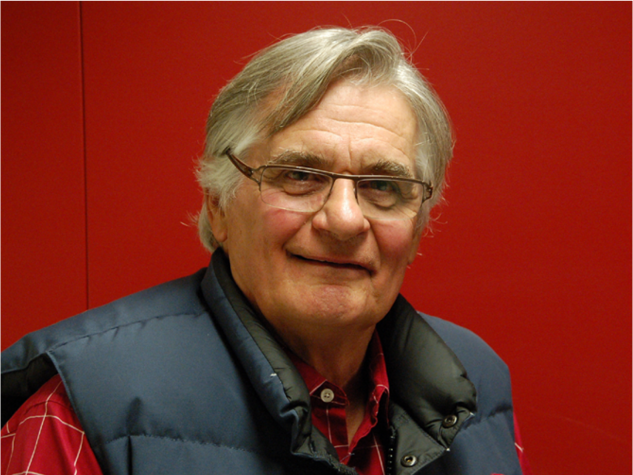
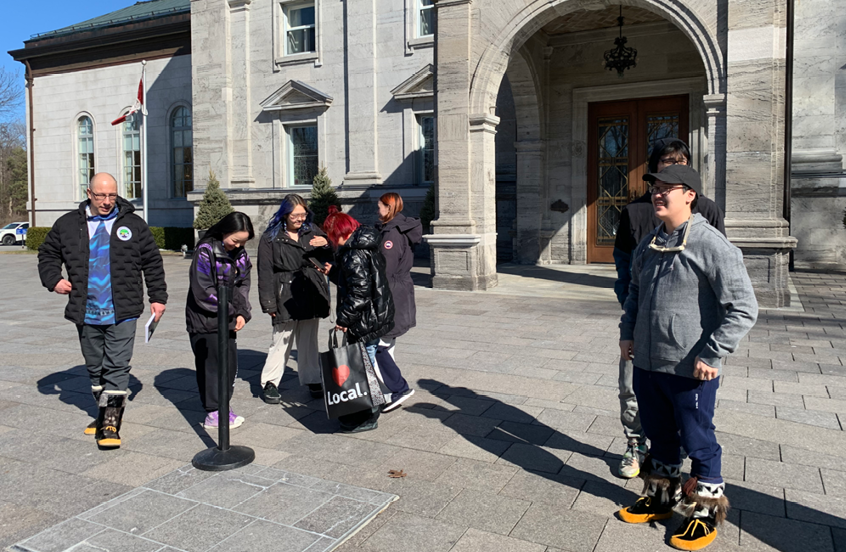
A group of students from Helen Kalvak School in Ulukhaktok visited Rideau Hall to
interview Whit Fraser about reporting on the Berger Inquiry for the CBC.
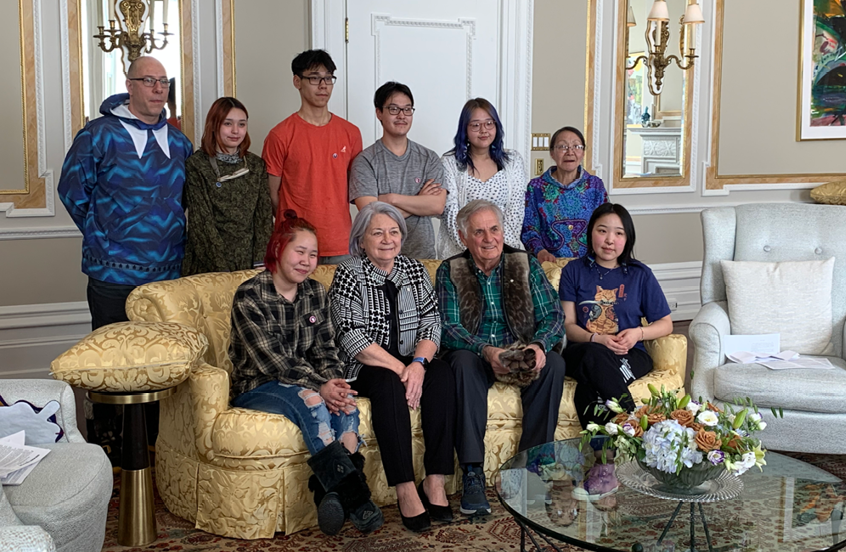
At Rideau Hall, students were taken on a tour of the historic building. They met Governor
General Mary Simon and sat down with Whit Fraser for the interview.
Photo: Michael Jackson
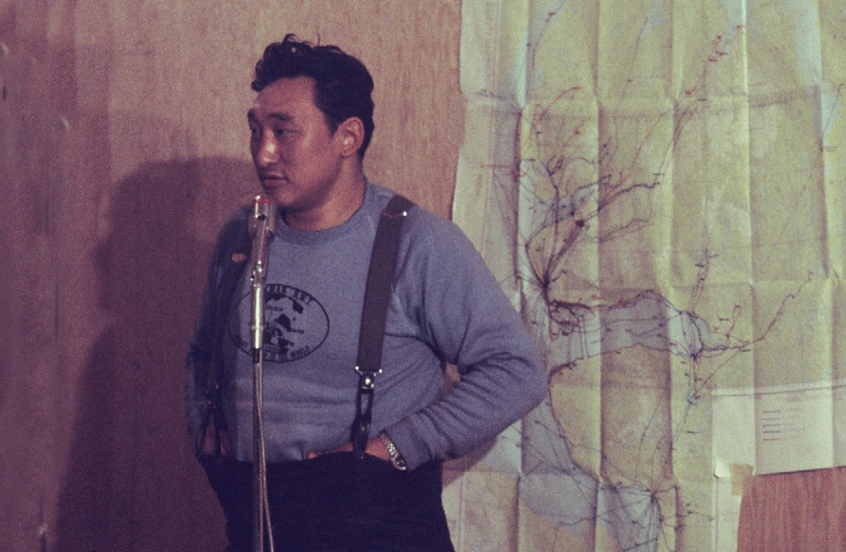
Q. Ulukhaktok people listened to Abe Okpik's nightly reports from the hearings. How did
that prepare residents for the hearings in their own community?
Photo: Michael Jackson
Q. Before the hearing, people prepared a map showing hunting, fishing, and trapping areas
used by Ulukhaktok families. What was the importance of preparing this map?
Photo: Michael Jackson
Q. In the 1970s, most government committees flew into a community and stayed for an
hour. The Berger Inquiry held hearings for two days. Did that make a difference?
Photo: Michael Jackson
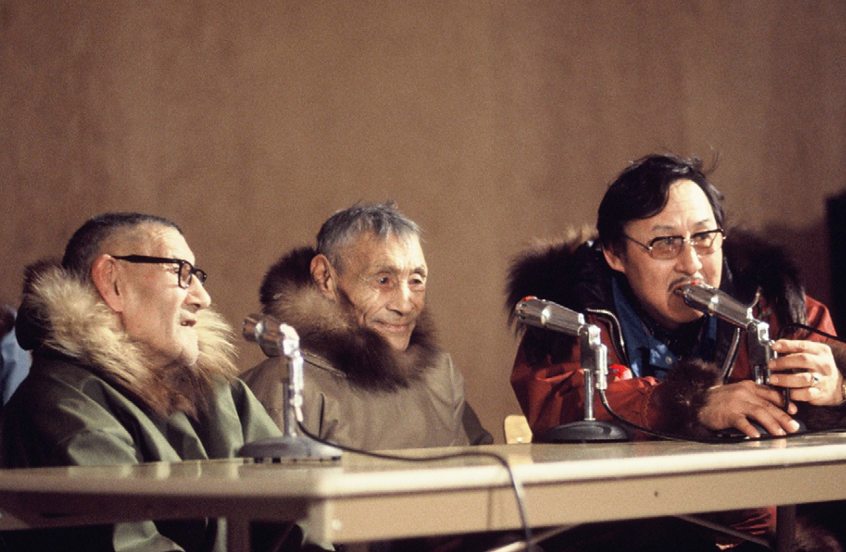
Q. The judge invited everyone to speak, including the elders who told stories from the
distant past. What contribution did those stories make to discussions of a pipeline?
Q. Were you surprised by how much land was being used?
Photo: Michael Jackson
Q. The testimony in Ulukhatuk was different from the evidence from pipeline companies.
How did reporters balance the evidence of the pipeline companies and the Inuvialuit?
Photo: Michael Jackson
Q. During your two days in Ulukhaktok, did you explore or socialize with the people?
Photo: Michael Jackson
Q. Annie Goose was critical of government committees that ignored the views of
community residents. Did Judge Berger honour the views expressed in the communities?
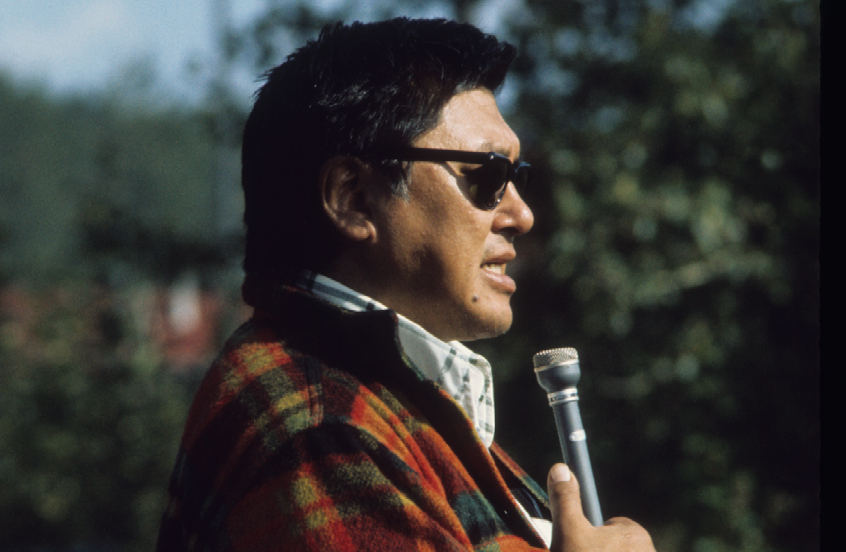
Photo: NWT Archives
Q. Was it ever hard to stay professional?