In my Opinion...


Tip#1

Tip#2

Tip#3

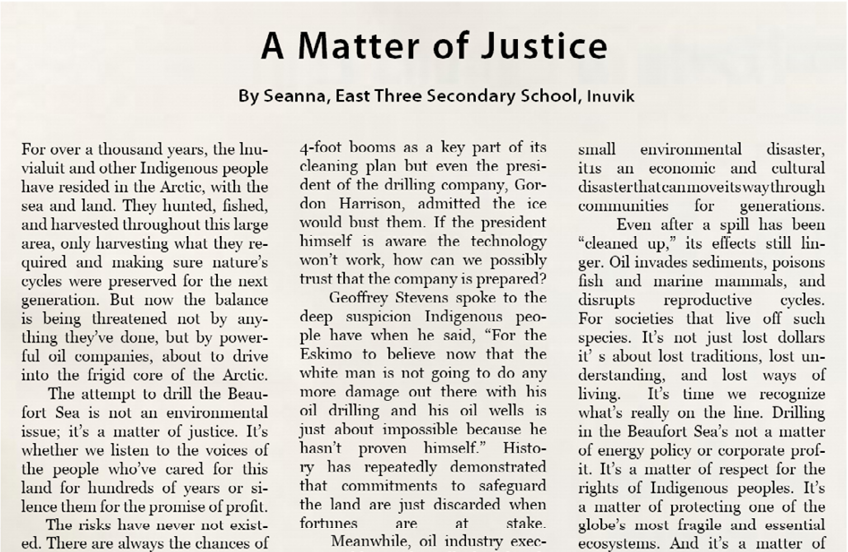
A Matter of Justice
For over a thousand years, the lnuvial-
uit and other Indigenous people have
resided in the Arctic, with the sea and
land. They hunted, fished, and harvest-
ed throughout this large area, only har-
vesting what they required and mak-
ing sure nature’s cycles were preserved
for the next generation. But now the
balance is being threatened not by
anything they’ve done, but by power-
ful oil companies, about to drive into
the frigid core of the Arctic.
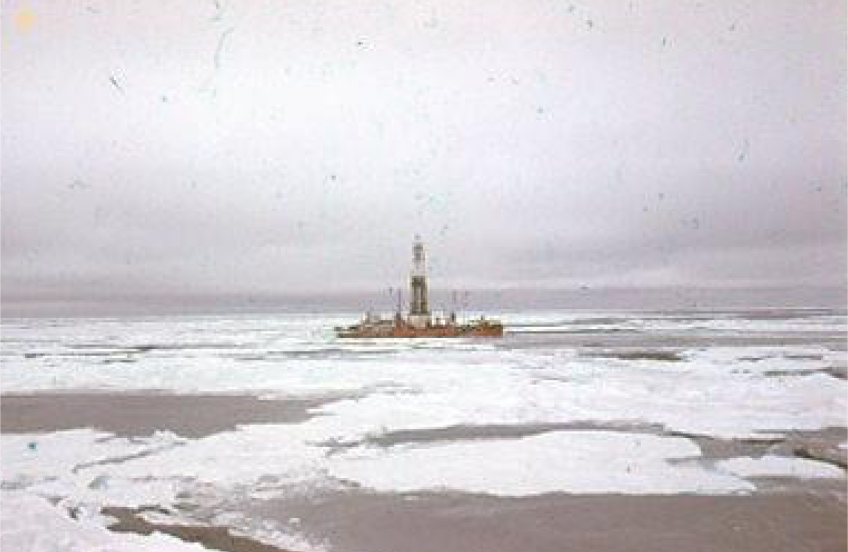
The attempt to drill the Beaufort
Sea is not an environmental issue; it’s
a matter of justice. It’s whether we lis-
ten to the voices of the people who’ve
cared for this land for hundreds of
years or silence them for the promise
of profit.
The risks have never not existed.
There are always the chances of pollu-
tion, of blowouts, of disastrous spills
that would take the Arctic ecosystem
decades or even centuries to recov-
er from. During the long winter, ice
covers the sea so that if a spill should
have occurred, the oil would effective-
ly wash up only under the ice, and far
beyond the reach of booms or clean-
up teams. Even in the summer, time is
short if there is a blowout, companies
would not have sufficient time to drill
a relief well before the ice returns, and
oil would move over the ocean all win-
ter.
And what has the industry said in
response? Less than promising prom-
ises and less-than-stellar plans. One
company mentioned its 4-foot booms
as a key part of its cleaning plan but
even the president of the drilling com-
pany, Gordon Harrison, admitted the
ice would bust them. If the president
himself is aware the technology won’t
work, how can we possibly trust that
the company is prepared?
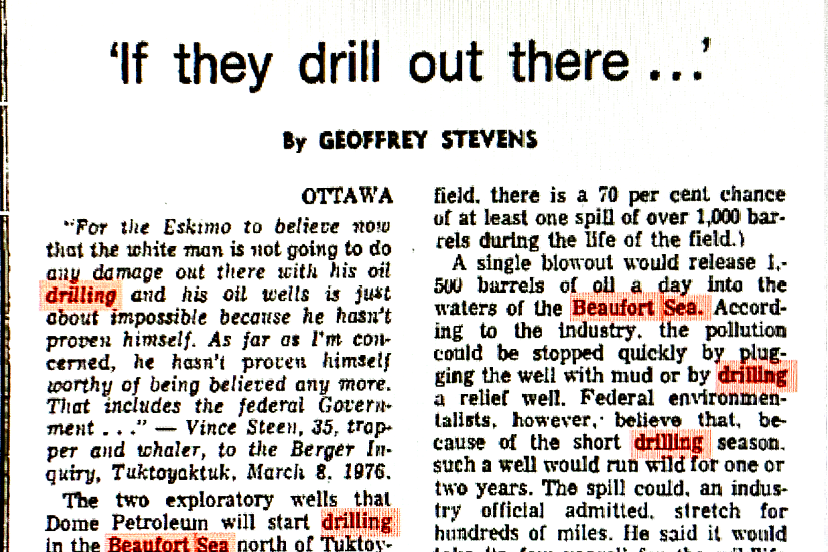
Geoffrey Stevens spoke to the deep
suspicion Indigenous people have
when he said, “For the
Eskimo to believe now that the white
man is not going to do any more dam-
age out there with his oil drilling and
his oil wells is just about impossible
because he hasn’t proven himself.” His-
tory has repeatedly demonstrated that
commitments to safeguard the land
are just discarded when
fortunes are at stake.
Meanwhile, oil industry executives
like Jack Gallagher brush aside con-
cerns, saying, “Oil is
natural in the sea. Oil is formed when
animals in the sea die and decay. Peo-
ple get all upset about a little bit of oil
in the sea, but it is not a big issue.” That
approach ignores hard scientific reality
and ignores the human cost.
Oil spills are not little setbacks. They
kill marine animals, from whales and
seals to seabirds and fish. They destroy
the fragile food and wildlife that Arctic
communities depend on for survival.
Inuit don’t just rely on marine animals
for food, but also for their culture, their
society, and
themselves. An oil spill is not a small
environmental disaster, it1s an eco-
nomic and cultural
disaster that can move its way through
communities for generations.
Even after a spill has been “cleaned
up,” its effects still linger. Oil invades
sediments, poisons
fish and marine mammals, and dis-
rupts reproductive cycles. For societies
that live off such
species. It’s not just lost dollars it’ s
about lost traditions, lost understand-
ing, and lost ways of
living. It’s time we recognize what’s re-
ally on the line. Drilling in the Beaufort
Sea’s not a matter of energy policy or
corporate profit. It’s a matter of respect
for the rights of Indigenous peoples.
It’s a matter of protecting one of the
globe’s most fragile and essential eco-
systems. And it’s a matter of recogniz-
ing some dangers are just too great, no
matter how much oil might lie buried
under the ice.
Unless the companies behind Arc-
tic drilling can present a genuine fool-
proof, ice-tested clean-up plan and
unless they show they are prepared
to grant Indigenous people a genuine
voice, not just token consultation Arc-
tic drilling must not go ahead.
We owe it to the land. We owe it to
the wild. And most importantly, we
owe it to the people who have called
this place home for thousands of years.